

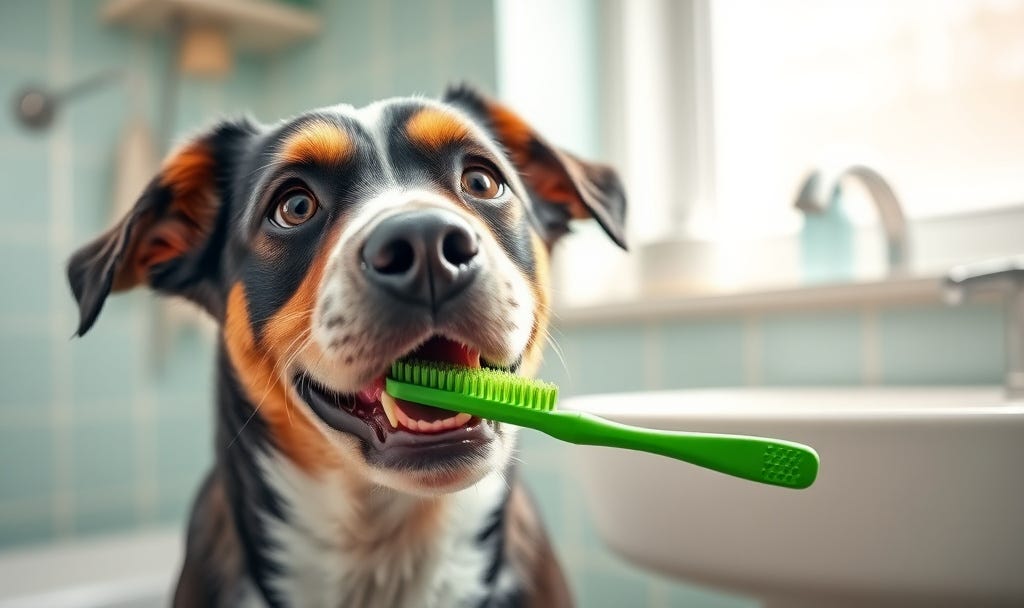
If you’re feeding Green Dental Chews or considering them for dental health, it’s worth digging into what’s really in these treats and how they affect your dog’s overall health.
Potential Concerns with Greenies:
Highly Processed Ingredients:
Wheat flour, wheat gluten, glycerin, gelatin, powdered cellulose (wood pulp), and vague “natural flavorings” don’t belong in a species-appropriate diet.High in Carbohydrates:
These treats are mostly carbs—which feed yeast, promote inflammation, and are unnecessary in a fresh or raw-fed dog.Synthetic Additives:
Includes synthetic vitamins and minerals like zinc sulfate, vitamin A supplement, and choline chloride—not bioavailable and not food-sourced.Digestibility Risks:
Dogs that gulp or don’t chew thoroughly may suffer from digestive upset or even intestinal blockages.Dental Health Claims Are Misleading:
Greenies may reduce tartar, but that doesn’t mean they support real oral health. Dental disease is systemic—just scraping plaque won’t fix it.
Yes, I know your dog loves them and think it’s part of the bedtime routine. But you can do better.
Better Options:
Raw meaty bones (safely sized)
Natural chews like bully sticks, tendons, or trachea
Food-based dental powders (kelp, parsley, probiotics)
Essential oil blends like Copaiba and Myrrh (topical use only)
Brushing with a natural toothpaste
Greenies carry the VOHC (Veterinary Oral Health Council) seal, which can mislead consumers into thinking they are the gold standard for dental care. But:
VOHC approval is based on plaque/tartar reduction, not elimination
It doesn’t factor in overall health impact
Mechanical abrasion alone isn’t the same as addressing oral microbiome balance, inflammation, or diet-driven tartar formation
Have questions about safer dental options?
Drop your questions below