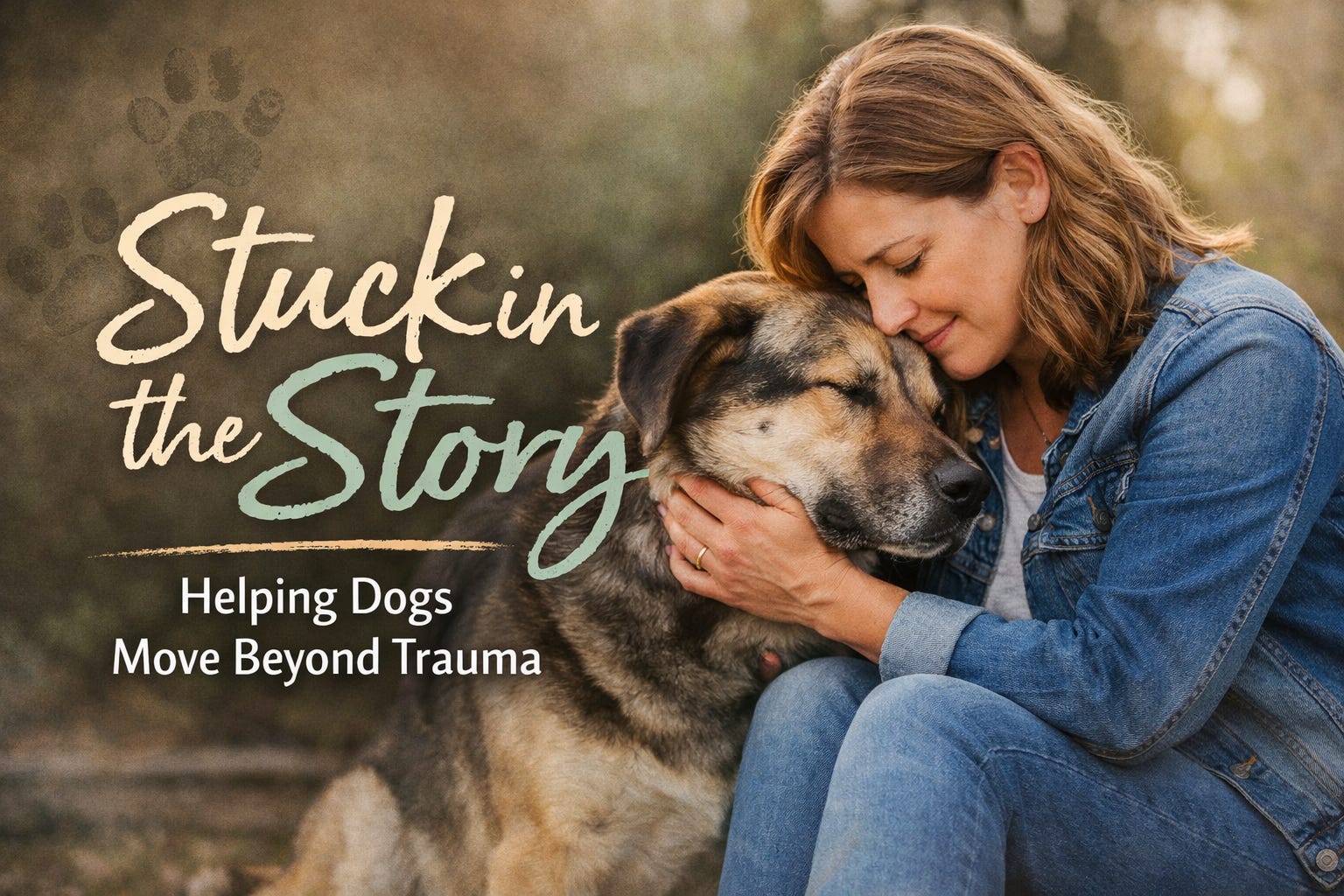
Sometimes I find myself doing the doom-scroll on social media… just looking for something light. Something funny. Something that makes me laugh.
But lately, that’s not what I’m seeing.
What shows up more often than not are accounts centered around dogs with trauma, anxiety, fear, aging… struggle. And it’s painful for me.
Dog after dog…
Story after story…
Account after account…
What gets me isn’t that the trauma exists — though I’m sad for their experiences.
It’s that I don’t always see the effort toward healing. Maybe it’s happening behind the scenes… I hope it is.
But sometimes months—or even years—go by, and the story being told is still the same one rooted in the past.
At some point, they start living that story.
They tell it.
They retell it.
They relive it daily.
They make reels about it.
I mean we all care about the poor dog.
And eventually… it becomes the identity.
You’ve probably seen them too:
• “He’s always been terrified of car rides…”
• “She can’t handle the vet…”
• “Fireworks completely shut him down every year…”
• “He needs a no-men home…”
• “She can’t be around other dogs…”
• this really bad thing happened…
And here’s the hard question:
What are we doing about it?
Not managing.
Not avoiding.
Not labeling.
Actually doing.
But here’s what I can’t ignore.
When a dog stays in a constant state of stress… it doesn’t just affect behavior.
It affects the body.
The nervous system stays on edge.
Inflammation stays elevated.
Digestion, immune health, and recovery all take a hit.
Over time, that shows up as more than “anxious behavior.”
It impacts overall health… and yes, longevity.
And the longer a pattern repeats, the stronger it gets.
Months of practice.
Months of reinforcement.
So what if there’s one more layer to explore?
Even if you feel like you’ve tried everything.
Healing trauma in dogs isn’t one thing. It’s layered.
• Supporting the nervous system
• Nutrition that reduces inflammation and supports the brain
• Interrupting patterns instead of reinforcing them
• Building safety through repetition—not avoidance
• Emotional release and energy work
• Consistent, steady leadership from the human
This is why early support matters… but it’s not the only window.
Even years later, the body can learn something new.
Dogs don’t have to stay stuck.
And neither do the stories we tell about them… or the patterns we unknowingly reinforce.
This is a passion topic for me.
Because I’ve seen what happens when things start to shift.
If you have a dog that feels stuck—let’s look at it differently.
I dig into this more in my member area — but you can find resources on my website!
https://welloiledk9.com
Subscribe and let’s talk about it!