

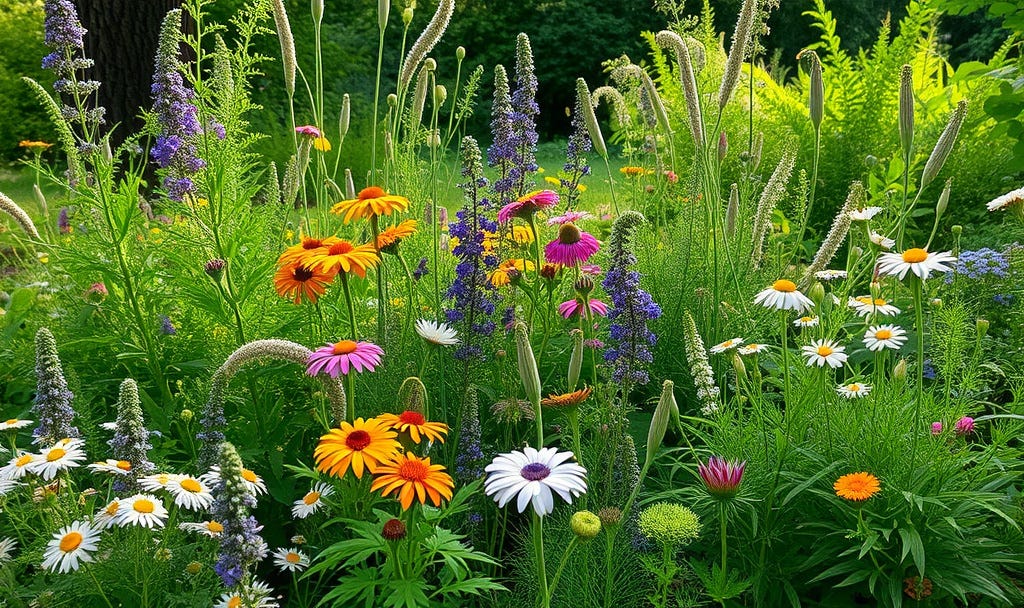
There’s an old saying among herbalists and natural healers:
“The cure grows next to the cause.”
The more time I spend in nature — whether walking trails, tending herbs, or watching how plants appear season to season — the more I see how true this is.
Nature never leaves an imbalance without a solution nearby. Every forest, field, and garden has its own pharmacy… and it’s astonishing how many remedies grow just feet away from the very thing that causes irritation, illness, or imbalance.
Real Examples from Nature’s Design
Poison Ivy & Jewelweed
Where poison ivy grows, jewelweed almost always follows — especially in damp, shaded areas. The sap from jewelweed’s stem soothes the same rash poison ivy causes. Nature doesn’t create a problem without also providing the answer.
Nettles & Dock
Brush against stinging nettle, and you’ll often find curly dock or burdock growing close by. Dock’s cooling, mucilaginous leaves instantly calm the sting.
Mosquitoes & Lemongrass (or Citronella)
In humid environments where mosquitoes thrive, aromatic grasses like lemongrass and citronella often appear naturally. Their volatile oils repel insects, keeping balance in the ecosystem.
Dandelion & Disturbed Soil
You’ll see dandelions pushing through compacted, poor soil — their deep taproots breaking it up and pulling minerals to the surface. That’s the same way dandelion supports the body’s detox and mineral balance.
Mullein & Dusty Roads
Mullein loves dry, disturbed soil — the same places where dust and air quality challenge the lungs. Its fuzzy leaves and soothing compounds are ideal for respiratory health.
Willow & Water
Wherever water gathers, willow trees thrive. Their bark — the original source of salicin (a natural pain reliever) — offers exactly what’s needed in damp, swelling-prone environments.
Ticks and Kunzea
In Tasmania and the coastal regions of Australia where ticks and biting insects are abundant, Kunzea ambigua grows wild along the shoreline. Its fragrant oil acts as a natural repellent and skin soother — the perfect example of nature balancing pest pressure with plant protection.
Kunzea is hardy in its native environment but can be tricky to grow elsewhere unless you live in a mild, coastal climate with sandy, well-drained soil. It prefers full sun and tolerates salty air but doesn’t do well in heavy clay or cold winters.
For most of us, the essential oil is the best way to access its benefits.
Diffuse or apply (properly diluted) to repel ticks and insects.
Combine with oils like cedarwood, citronella, lemongrass, or rosemary for broad-spectrum natural defense.
It also soothes irritation and inflammation if a bite occurs.
Kunzea demonstrates nature’s intelligence: where ticks thrive, their natural deterrent grows nearby.
Flea Deterrents and Garden Wisdom
Fleas are opportunists, but nature arms us well:
Rosemary, Lavender, and Peppermint – aromatic herbs that repel fleas naturally; easy to grow in planters near doors or patios.
Lemongrass and Citronella – great for warm climates and outdoor lounging areas.
Chamomile and Calendula – soothe skin irritation from bites and scratches.
Neem (in oil form) – has strong insect-repelling properties and can be used (diluted) in natural sprays.
A garden filled with these plants does more than look pretty — it creates a natural perimeter of protection for you and your pets.
The Energetic Lesson
From an energetic perspective, nature creates opposites to restore equilibrium.
Hot environments produce cooling herbs (mint, aloe, dandelion).
Dry, windy areas give rise to moisture-rich plants (comfrey, mullein).
Damp, stagnant regions grow aromatic movers (thyme, rosemary).
Each ecosystem corrects itself, and those same corrections can support us and our animals.
For Dog Moms and Holistic Pet Parents
The plants that thrive around you often contain exactly what’s needed for local challenges — bugs, heat, humidity, allergens, even emotional balance.
Many of the essential oils we use — citronella, cedarwood, Kunzea, lavender — are distillations of plants that already grow near the problem.
Nature doesn’t scatter healing at random… it’s intentional, connected, and wise.
A Thought to Carry
When you walk outside, pause and look at what’s growing around you — especially the “weeds.”
Ask yourself: What might this plant be trying to tell me about balance?
Sometimes, the antidote to our dog’s discomfort — or even our own — is right underfoot.
Community Connection Idea:
What grows near you that seems to match your environment’s challenges?
Share photos of local plants.
Post your favorite natural flea/tick deterrent combos.
Or show us your dog-safe herb garden!
Sometimes, the antidote to our dog’s discomfort — or even our own — is right underfoot.
Explore plants – herbs and essential oils as options! Consider a garden of plants that protect and heal your environment.
I think of course this assumes we humans haven’t decided our redesign of nature is better than Gods design.
Have never had it explained like this. Wow! Amazing!