

You know that moment when your dog just… can’t settle?
Pacing. Watching everything. Reacting to things that didn’t used to bother them. Or maybe they’re glued to you, like if they lose sight of you for a second, something might go wrong.
Most people go straight to training.
More structure. More commands. More exposure.
Many people try to comfort with voice and petting but wind up reinforcing the behavior inadvertently.
But here’s the piece I want you to really sit with for a minute…
You can’t out-train a body that feels unsafe.
Anxiety doesn’t start in behavior.
It starts in the nervous system.
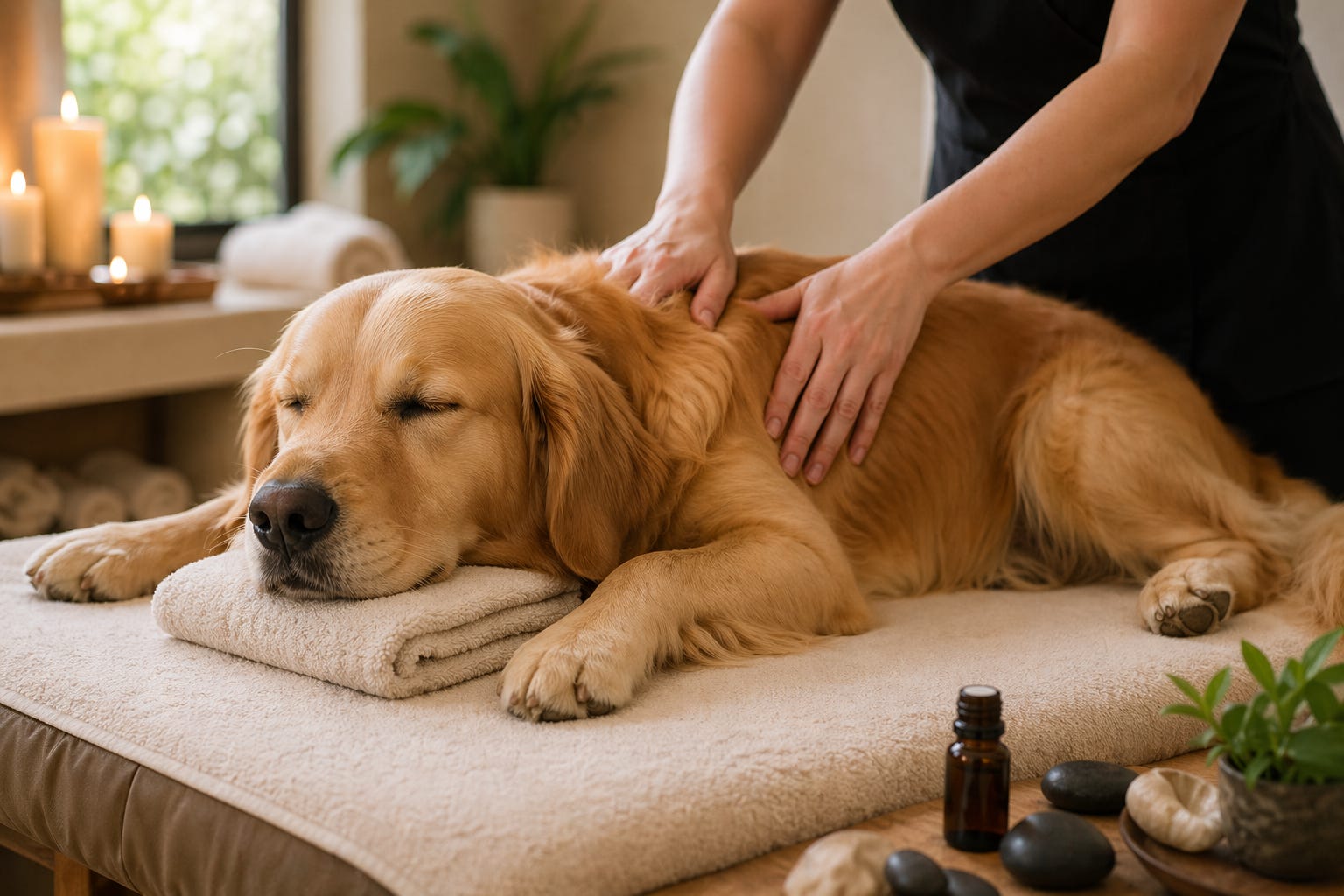
And that’s exactly why touch, when done right, can change things so quickly.
Why touch works
When your dog is in that heightened state — alert, reactive, “on edge” — their body is essentially running a stress response.
Heart rate up. Muscles tight. Breathing shallow.
They’re not choosing behavior… they’re responding to how their body feels.
Gentle, intentional touch gives the body a different signal.
It says:
“You’re safe enough to let go a little.”
And when the body believes that… even just a little… you’ll start to see it:
A slower breath
A soft blink
A yawn
A shift in posture
That’s the nervous system changing gears.
Not because you corrected anything…
But because you supported the body.
This is especially helpful:
After a stimulating walk
When your dog can’t seem to settle in the house
During storms or environmental stress
Before situations that usually trigger anxiety
Or honestly… just as a daily reset
Try this tonight
Start with the chest.
No words are needed.
This is one of the fastest ways to help a dog soften.
Place your hand gently over the center of your dog’s chest (not the throat), and make slow, small circles.
Nothing fancy.
Keep the pressure light and steady — not pokey, not fast.
Match your movement to a slow breath.
And then just… watch.
Don’t talk. Don’t overthink it.
Look for:
A deeper exhale
Eyes softening
A shift in their body weight
Maybe even that full-body “melt”
Some dogs respond in seconds.
Some take a few tries.
Either way, you’re speaking directly to the nervous system.
Now let’s layer in something that makes this even more effective…
Essential oils.
This is where I see things go from “that helped a little” to “wow… what just happened?”
Because now you’re not just using touch…
You’re supporting:
The emotional state
The limbic system (how your dog processes stress)
The physical body (tension, inflammation, circulation)
The nervous system’s ability to regulate
Certain oils naturally encourage calm, grounding, and emotional balance.
So when you pair them with slow bodywork like this, you’re reinforcing the same message from multiple angles:
“You’re safe. You can let go.”
And dogs get that… quickly.
This is exactly why I use oils alongside hands-on work in my own dogs and with clients — it’s not extra, it’s foundational.
If this is resonating, don’t stop at just one technique.
There are a few specific areas on the body that can make a big difference when you know how to use them — and how to read your dog while you’re doing it.
I broke it all down here, including what to watch for and how to do each one:
👉 Read the full blog:
https://welloiledk9.com/health/physical-calming-techniques-for-dogs
If you try the chest circles or other techniques tonight, I’d love to hear your observations and results.
Sometimes the smallest shifts tell you the most about what your dog has been holding onto.
Don’t forget anxiety lives in the gut — so we need to address the nutritional element too
.