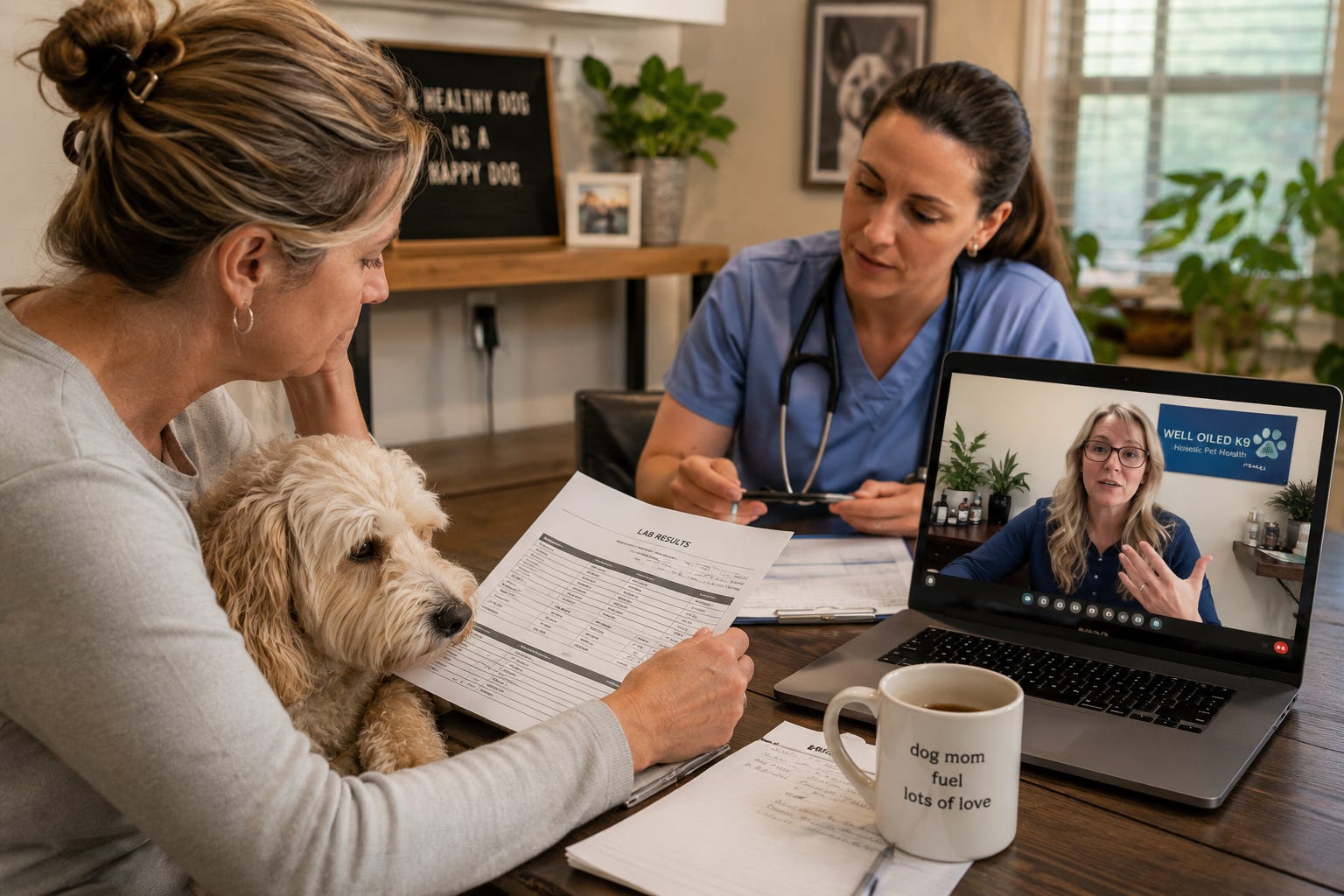
One of the biggest misconceptions I see in the dog world is the idea that you have to choose.
You either follow your veterinarian’s recommendations, or you explore nutrition, fresh foods, herbs, supplements, and other holistic approaches.
I don’t believe that for a second.
In fact, I think some of the best outcomes happen when pet parents build a team.
Your veterinarian brings diagnostics, blood work, imaging, surgery, emergency medicine, and medications when they’re needed. A holistic pet health coach brings another perspective—nutrition, gut health, immune resilience, environmental factors, lifestyle, movement, and long-term wellness strategies that can support the body every single day.
It doesn’t have to be an or decision.
It can absolutely be an and decision.
Unfortunately, that’s usually not when I get the phone call.
More often, I hear, “Dana… we’ve already spent over $10,000 and we’re still struggling.”
I see the same thing in social media groups almost daily. Someone is desperately looking for options because they can’t afford another emergency visit, the nearest specialist is three hours away, or they’ve simply run out of money.
At the same time, I see veterinarians sharing their own heartbreak—families standing in the exam room with a sick dog, pleading for help while admitting they can’t pay for the care that’s needed.
No one wins in those situations.
The family is devastated. The veterinary team is frustrated because their hands are tied. And the dog is caught in the middle.
When clients finally reach me, they often tell the same story. They’ve been through multiple appointments, prescription diets, rounds of antibiotics, steroids, injections, and medication changes. They have folders full of lab work and discharge papers, yet they still feel like they’re chasing symptoms instead of building health.
Please don’t misunderstand me. Many of those treatments are necessary, and many dogs absolutely need them.
But I often find myself wishing we had started working together much earlier—not instead of the veterinarian, but alongside them.
Imagine having someone in your corner from the very beginning asking different questions.
How do we support the microbiome while antibiotics are needed?
How do we improve nutrition foundations instead of simply changing brands of kibble?
What fresh food toppers and antioxidant-rich ingredients can we add to help nourish the body?
How do we identify food intolerances before years of recurring ear infections and itchy skin?
Is there a natural option to address the health concern that doesn’t have the same side effects or doesn’t suppress the symptom?
How and When do we focus on maintaining muscle and a healthy body weight before arthritis or a CCL injury develops?
Can we heal that CCL injury without surgery?
Do you know to look at breed predispositions and make proactive choices long before symptoms appear?
Let’s have a conversation about reducing unnecessary toxic exposures and supporting the body’s natural resilience?
Let’s create a collaboration plan where we meet weekly (or daily in some cases) to talk about what we’re seeing in the dog’s results, lack of, or your own emotions.
We can spend time your vet just doesn’t have in an appointment.
Those conversations don’t replace veterinary medicine.
They complement it.
And that’s exactly where I believe a health coach provides value.
The goal isn’t to promise that your dog will never develop cancer, pancreatitis, diabetes, kidney disease, or heart disease. No one can make that promise. Genetics matter. Aging matters. Sometimes life simply isn’t fair.
The goal is to build the strongest, healthiest, most resilient body possible so that if challenges arise, your dog starts from a better place.
It’s also about recognizing that proactive choices today may save significant money tomorrow.
Recurring ear infections often mean repeat exams, medications, and follow-up visits. Chronic digestive issues can turn into expensive emergency trips for bloody diarrhea or dehydration. Food intolerances may lead to years of prescription diets and medications without addressing underlying contributors. Excess weight increases stress on joints, potentially leading to arthritis, mobility challenges, or orthopedic injuries. A single hospitalization for pancreatitis can cost thousands of dollars. Lifelong management of diabetes or heart disease adds up quickly.
Even a simple first aid kit can make a difference. Having basic supplies on hand when your dog tears a nail, cuts a paw pad, gets stung by bees, or develops diarrhea at 2:00 in the morning can buy valuable time while you’re contacting your veterinarian. Knowing what to do in an emergency makes for much better outcomes. Being prepared doesn’t replace professional care, but it can reduce panic and improve your response in those critical first moments.
The truth is, most families don’t have an extra $10,000 sitting in a savings account waiting for an unexpected veterinary emergency, let alone to keep treating allergies and ear infections.
That’s why I believe education is one of the best investments you can make.
Learning how to read ingredient labels. Understanding the importance of the microbiome. Feeding more fresh food when possible. Supporting immune health. Keeping your dog lean and active. Recognizing patterns before they become chronic. Asking better questions. Thinking about longevity instead of simply reacting to disease.
Those are the kinds of conversations I wish every pet parent had long before a diagnosis.
It’s also why I built my community.
I wanted a place where people could learn continuously, ask questions without judgment, access practical guides, and gain confidence in the day-to-day decisions that influence health over a lifetime. A place where conventional veterinary care and natural wellness don’t compete—they work together.
If you take only one thing away from this article, let it be this:
Don’t wait until you’ve been through three rounds of antibiotics.
Don’t wait until the fourth ear infection.
Don’t wait until the second bout of pancreatitis or another emergency visit for colitis.
Don’t wait until you’ve emptied your savings account chasing answers.
Build your team early. Your community and your education.
Work with your veterinarian. Learn from a trusted health coach. Ask questions. Stay curious. Feed the best diet you reasonably can. Support the body before it’s in crisis. Take advantage of the seasonal protocols for maintenance — much like an oil change and tire rotation in your car.
I’d much rather help you keep a healthy dog healthy than see you struggle and hear, “I wish I’d known all of this sooner.”
If that message resonates with you, I invite you to explore the resources at WellOiledK9.com and join my community. It’s the place I can share info and you them when you need them or get me on the phone when necessary. My mission is simple: help pet parents build healthier, more resilient dogs through education, practical support, and thoughtful collaboration—because when we invest in health early, we often save money, reduce heartache, and give our dogs the best chance to thrive for years to come.
A Personal Note From Me
Listen, I know this concept may be new for some people. That’s why I keep talking about it — to reach more of you and hope that you’re take a look and tell a friend.
My age may show a little here, but when I was younger, our dogs saw the vet once a year or when there was a true emergency. We didn’t see the level of chronic allergies, food intolerances, pancreatitis episodes, anxiety, aggression, skin issues, and mystery inflammation that I see today. And honestly? We had old dogs, especially on the farms, unless there was an accident.
But the world has changed.
The environment has changed. The soil has changed, and that affects our food sources and water. Products are everywhere — cleaners, lawn chemicals, air fresheners, pesticides, medications, ultra-processed foods, and synthetic everything. Marketing is messing with your mind. Meanwhile, opinions on social media are a dime a dozen. Even a good product recommended by another dog mom may not be the right suggestion for your dog. And some info is just plain wrong.
Veterinarians are overworked, overstressed, and many are leaving the field. They offer medical care, diagnostics, lab work, imaging, medications, and emergency support. And I’m grateful we have that when we need it. But many vets won’t or can’t comfortably discuss natural options with you. Even my own doctor won’t comment much on my oils, herbs, or homeopathy. He mostly says, “Whatever you’re doing, keep it up.” But I still need him sometimes — especially for diagnostics. And yes, I’ll use medication when I need to, for myself and for my dogs.
Rescues and shelters are overrun and doing their best with protocols designed to fight disease, limit liability, and provide urgent care. Thank God for them. Truly.
But protocols, medications, and convenient foods are not the same thing as building long-term health and longevity. Sometimes it’s symptom management, not root-cause support. Sometimes one problem improves while another one pops up from side effects or lack of deeper support.
That’s where education, nutrition, immune support, fresh food, detox awareness, and proactive wellness come in. Not instead of veterinary care. Alongside it.
Because the goal is not just to get your dog through the next crisis. The goal is to build a healthier, more resilient body for the years ahead.
My goal remains simple: for your dog to eat better, feel better, and live longer.
It’s a great honor to be part of that for your dog and your family.
Dana