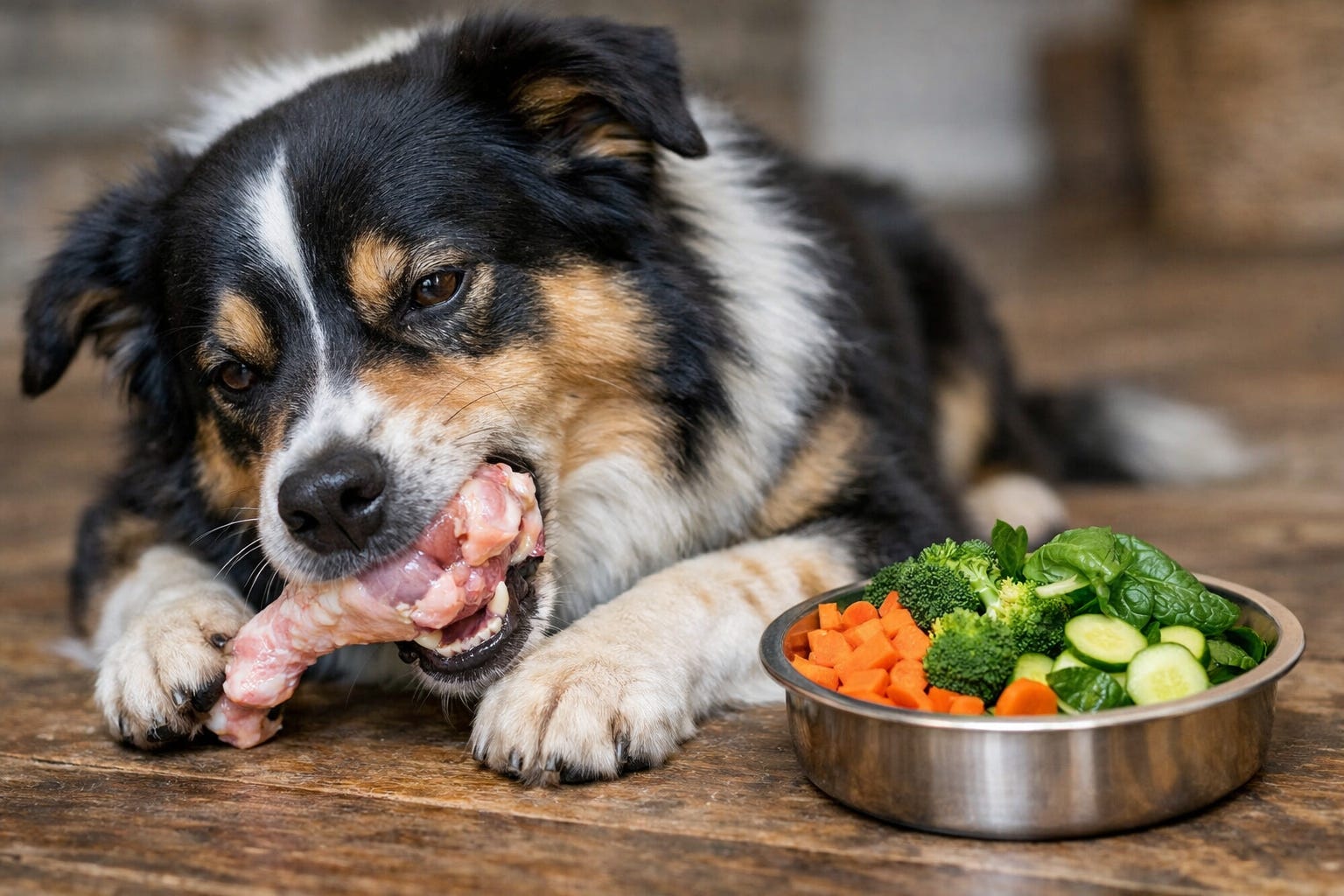
If you’ve been wondering how to make your dog’s kibble healthier — you’re not alone. Many pet parents are realizing that kibble alone just doesn’t deliver the same nutrition as fresh, whole food. The good news? You don’t have to go 100% raw or homemade to make a big difference.
Adding just 10–20% fresh food to your dog’s diet can improve digestion, strengthen the immune system, and help reduce inflammation that contributes to chronic disease.
And one of the easiest ways to start is by adding fresh, lightly steamed vegetables right into the bowl.
Why Vegetables Matter in a Kibble Diet
Most kibble brands rely on synthetic vitamins and minerals to meet nutritional requirements. But these lab-made additives are not always well absorbed — meaning your dog’s body may not actually be getting the nutrients on the label.
Fresh vegetables, on the other hand, deliver natural phytonutrients, antioxidants, enzymes, and fiber that help the body detoxify, balance pH, and feed beneficial gut bacteria.
Rotating a mix of safe vegetables such as:
Broccoli
Zucchini
Green beans
Spinach
Pumpkin or squash
Mushrooms
…can help fill in nutrient gaps without adding excess calories.
If You’re Feeding a Complete & Balanced Diet
If you’re already feeding a properly formulated, complete and balanced meal (whether that’s premade raw, gently cooked, or a well-built DIY plan), you may not need to add anything.
Adding more isn’t always better.
In some cases, piling on extras can:
Dilute nutrients
Throw off ratios (especially minerals)
Lead to digestive upset in sensitive dogs
So if your dog is thriving — good stool, good energy, good coat — you don’t need to fix what isn’t broken.
Think of veggies as a tool… not a requirement.
If You’re Feeding an 80/10/10 Raw Diet
This is where vegetables can really make a difference.
A strict 80/10/10 grind (80% muscle meat, 10% bone, 10% organ) covers the structural basics — protein, fat, calcium, and organ-derived nutrients — but it’s still missing some key pieces.
Adding vegetables can help fill in those gaps.
Here’s why you might consider it:
Fiber for the gut
Helps support microbiome balance, stool quality, and natural detox pathways.
Most 80/10/10 diets are very low in fiber.Polyphenols & antioxidants
These support cellular health, inflammation balance, and long-term resilience — especially important for seniors or dogs dealing with chronic issues.Natural detox support
Certain vegetables support liver function, bile flow, and toxin binding in the gut.Additional micronutrients
While organs are nutrient-dense, they don’t cover everything — especially when sourcing is inconsistent.Variety for the microbiome
More diversity in the bowl = more diversity in gut bacteria.
And that matters more than most people realize.
A Quick Reality Check
Dogs don’t require vegetables in the same way humans do.
But in the modern world — with environmental toxins, stress, medications, and processed exposures — a little extra support can go a long way.
You’re not feeding vegetables because your dog is a wolf.
You’re feeding them because your dog is living in 2026.
Keep It Balanced
While veggies are incredibly beneficial, balance still matters — especially if you start adding other fresh foods like meat or organ meats.
Too much calcium, fat, or fiber can throw off the ratio of nutrients over time. A good rule of thumb is to treat fresh add-ins as about 10–20% of the meal, and balance the rest over the week — not necessarily every bowl.
If you find yourself regularly adding meat, fish, or large portions of fresh food, it might be time to consider transitioning to a home-prepared plan where the nutrient math is done right.
Read next: Common Home-Prepared Dog Food Mistakes
Read also: Why Feeding Raw Meat to Your Dog Might Not Be Working
Why Balance Matters for Long-Term Health
Even with the best intentions, unbalanced feeding can lead to nutrient excesses or deficiencies — and those can cause long-term issues like joint problems, poor coat, or organ stress.
That’s why I recommend keeping things simple:
Rotate different veggies for variety
Avoid feeding the same mix every day
Monitor your dog’s digestion and stool
Work with a canine nutritionist if you’re making bigger changes
A little variety and balance go a long way toward building resilience and lowering disease risk over time.
Keep It Simple — Keep It Fresh
When it comes to boosting your dog’s kibble, you don’t need to reinvent the wheel.
Start small. Add a spoonful of fresh steamed veggies, mix them in with warm water or bone broth, and see how your dog responds.
Your dog’s health, energy, and digestion may thank you within just a few weeks.
Ready to personalize your dog’s nutrition plan?
Submit an inquiry for a consultation — let’s build a diet that truly supports your dog’s long-term wellness.