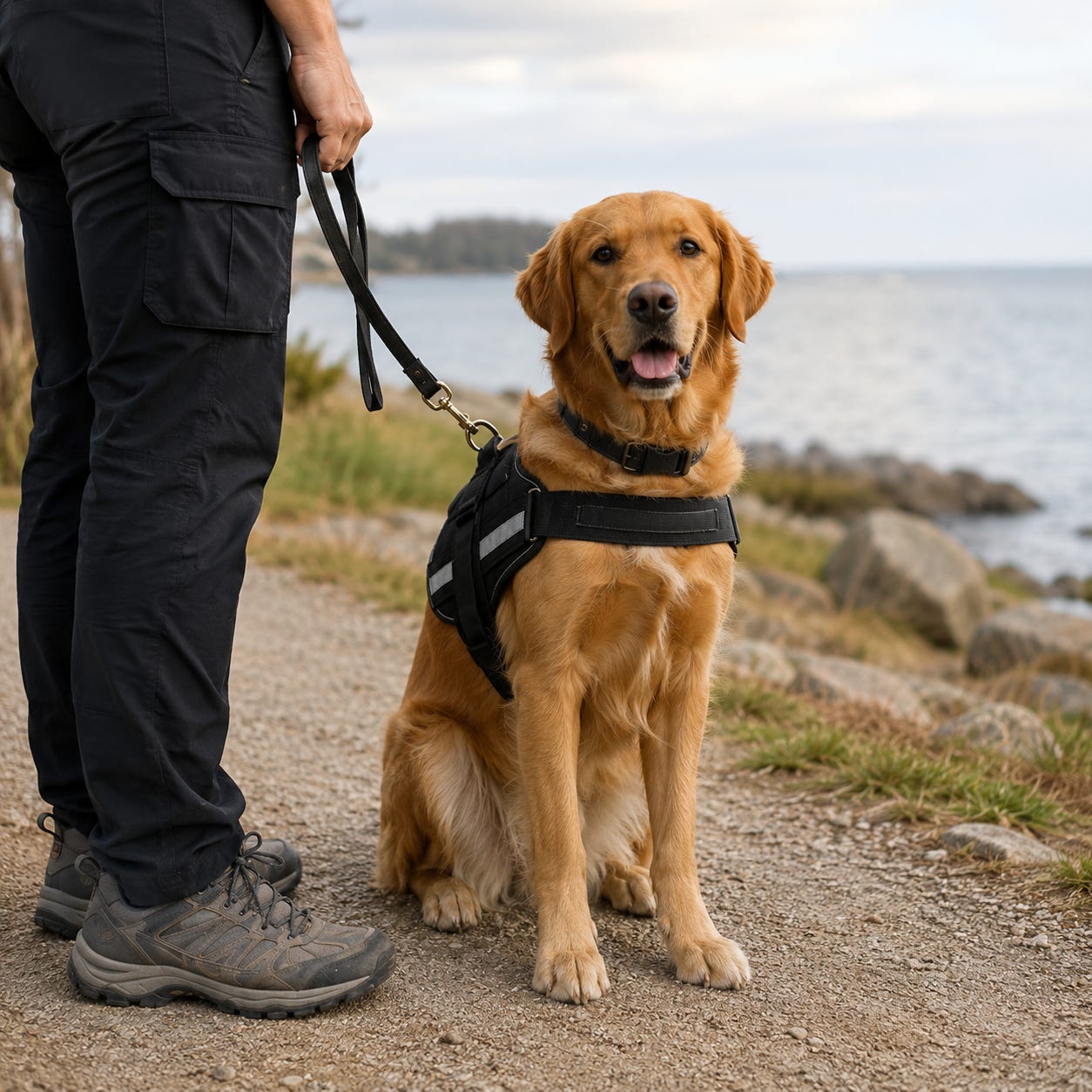
Everyone wants more years with their dog. I certainly do.
We want more walks, more couch time, more funny little routines, more gray muzzle mornings, more “please don’t ever leave me” days.
But when that dog is a service dog, therapy dog, emotional support dog, medical alert dog, PTSD support dog, mobility support dog, or the dog who helps someone feel safe enough to function… longevity carries a much heavier meaning.
Because that dog is not only loved.
That dog is part of someone’s daily ability to live.
They may be the reason their person can leave the house, sleep through the night, recover from panic, notice a medical change, feel grounded after trauma, navigate public spaces, or simply face the day with more confidence. That kind of bond is not casual. It is not “just companionship.” It is trust built through repetition, presence, routine, safety, and deep emotional connection.
So when that dog starts to decline too soon, it is not only heartbreaking. It can shake the entire structure of someone’s life.
That is why proactive health support matters so much for these dogs.
It is maintenance for a partnership that someone may depend on every single day.
The Investment Does Not Stop at Training
People invest a lot into service and support dogs. They invest time, money, training, travel, equipment, practice, patience, and a level of emotional energy that most people do not fully understand unless they have lived it.
The dog learns the person. The person learns the dog. The routines become familiar. The dog begins to understand patterns, triggers, signals, environments, stress changes, and the subtle things that may not be obvious to anyone else in the room.
That partnership is not built overnight.
So why would we invest so heavily in the training and bond, but wait until the dog is stiff, inflamed, foggy, overweight, anxious, exhausted, or struggling before we invest in the body that makes the work possible?
That is where we need to shift our thinking.
Health is part of the investment.
Nutrition is part of the investment. Mobility support is part of the investment. Brain health is part of the investment. Nervous system support is part of the investment. Low-tox living is part of the investment. Gut health, healthy weight, recovery, rest, and inflammation support are all part of protecting the dog’s ability to stay capable and comfortable.
Not because we are trying to turn dogs into fragile little bubble-wrapped creatures. Good grief, no.
Because a dog with an important role needs a body that is supported enough to keep doing that role.
Maintain the Working Machine Before It Breaks
Think about anything important that has a job.
A work truck. A boat. A medical device. An HVAC system in the middle of a Carolina summer. You do not wait until the engine blows, the warning lights flash, the tires shred, and smoke starts rolling out before you decide maintenance might have been helpful.
You change the oil. Check the fluids. Watch the tires. Listen for the weird noise before it becomes the expensive noise. You replace what is wearing down before the whole system fails.
Not because you are paranoid.
Because the thing matters, and the job matters.
Now, dogs are not machines. They are living, breathing, feeling beings with hearts, emotions, preferences, stress responses, and very strong opinions about snacks, routines, and where everyone should sit on the couch.
But the analogy still fits.
A service or support dog has a working body. A working brain. A working nervous system. A working gut. A working immune system. Working joints, muscles, tendons, ligaments, eyes, ears, and paws.
If those systems begin to wear down, the dog’s ability to serve, support, regulate, alert, move, focus, and recover begins to wear down too.
Maintenance is easier than repair. Early support is easier than crisis management. Protecting strength is easier than trying to rebuild it after decline has already taken hold.
Their Body Is Part of the Job
A service dog with sore joints cannot move as freely. A therapy dog with chronic inflammation may tire faster. An emotional support dog with poor gut health, poor sleep, or nervous system stress may struggle to stay steady and regulated. A medical alert dog with cognitive decline may lose confidence, focus, or reliability. A mobility support dog with weak muscles, excess weight, or connective tissue strain may not be able to safely support their person.
These are not small details.
These are the systems that allow the dog to do the work.
And dogs are very good at hiding discomfort. By the time we see limping, hesitation, stiffness, behavior changes, anxiety, restlessness, confusion, reluctance, or what gets labeled as “stubbornness,” the body may have been whispering for months.
This is why waiting for obvious decline is a poor plan.
For every dog, yes. But especially for the dogs whose humans depend on them.
The Emotional Cost of Decline Is Different
When any beloved dog declines, it hurts. There is no way around that.
But when a service or support dog declines, there is often another layer of loss that people do not always talk about.
The handler may lose confidence. Public outings may become harder. Sleep may suffer. Medical safety may feel less secure. Anxiety may increase. Routines may fall apart. The person may grieve the dog’s changes while also wondering how they are going to function without the support that dog has provided.
That is a very different kind of grief.
It is not only “my dog is getting older.”
It can also be “my independence is changing.”
“My safety net is changing.”
“My daily rhythm is changing.”
“The one who helped me hold it together now needs me to hold them together.”
That is powerful. And it deserves more respect than a casual “well, dogs age.”
Yes, dogs age. We cannot stop that. But we can absolutely do better at supporting the body before decline becomes the only thing we are reacting to.
Longevity Is Not Just More Years
Longevity is not just about keeping a dog alive longer.
It is about helping them stay well longer.
Clear-minded longer. Mobile longer. Comfortable longer. Emotionally steady longer. Strong enough to move, recover, think, rest, connect, and enjoy life longer.
For service dogs, therapy dogs, emotional support dogs, and support dogs of all kinds, longevity is also about preserving the partnership as long as it remains healthy and fair for the dog.
That last part matters.
The goal is not to push a dog to keep working past comfort. The goal is to support them so they do not break down earlier than they should, and so their working years, semi-retirement years, and senior years are as strong and supported as possible.
That is the kind of longevity that matters.
Not just more time.
Better time.
The Foundation Matters More Than the Fancy Stuff
This does not mean throwing every supplement, oil, herb, device, powder, and internet miracle into the dog’s routine. That is not wellness. That is an expensive guessing game with a label maker.
The foundation is simpler, but it is not always easy.
It means feeding in a way that supports energy, lean muscle, the gut, the brain, and inflammation balance. It means keeping the dog at a healthy weight because every extra pound adds strain to joints and mobility. It means supporting connective tissue, muscle tone, and recovery before the dog is already struggling. It means paying attention to cognitive health before the dog is confused, restless, or losing confidence. It means lowering unnecessary toxin exposure in the home, yard, food bowl, and daily routine. It means noticing subtle changes instead of brushing them off.
It also means understanding that a dog’s behavior, mobility, digestion, skin, sleep, focus, and emotional regulation are not separate little boxes. They are connected. The body keeps score, and eventually the symptoms start talking louder.
Start Before the Breakdown
Do not wait until the dog is old to care about brain health.
Do not wait until the dog is limping to care about joints.
Do not wait until the dog is anxious to care about the nervous system.
Do not wait until the dog is inflamed to care about the bowl.
Do not wait until the body is overwhelmed to care about toxin load.
And please do not wait until your support dog is struggling to do their job before asking how to help them stay strong.
The earlier we support the foundation, the better chance we give that dog to stay capable, comfortable, connected, and resilient.
That matters for every dog.
But for the dogs who help their humans stay grounded, independent, safe, and functioning?
It matters in a whole different way.
Follow Along
I’ll be talk more about nutrition, mobility, cognitive support, low-tox living, nervous system health, inflammation, recovery, and longevity for service dogs, therapy dogs, emotional support dogs, senior dogs, anxious dogs, seizure dogs, mobility-challenged dogs, and the dogs who simply mean everything to their people.
These dogs give so much. They deserve more than “wait and see.”
They deserve support that helps them live well, move well, think clearly, recover better, and stay comfortable for as long as possible.
If your dog supports you emotionally, physically, medically, or simply helps you feel more like yourself, follow along. And when you are ready to talk through your dog’s specific needs, reach out so we can look at the whole dog — food, lifestyle, mobility, behavior, nervous system support, and the practical next steps that make sense for your situation.
Ask me about veteran access to my subscriber info and discounts on services.